Rembrandt van Rijn was born in Leiden and trained as a painter, including a period with Pieter Lastman in Amsterdam. He established himself first in his home city, then moved to Amsterdam in the early 1630s. Portrait commissions, ambitious historical scenes and an active workshop made him a leading figure in the artistic life of the Dutch Republic.
His first teacher was Jacob van Swanenburg; Lastman then introduced him to the narrative possibilities of history painting. In Amsterdam, the art dealer Hendrick Uylenburgh helped connect him with portrait clients. Rembrandt married Uylenburgh’s cousin Saskia in 1634, establishing a prosperous household while teaching pupils and building a substantial collection of art and objects.
The drama of being human
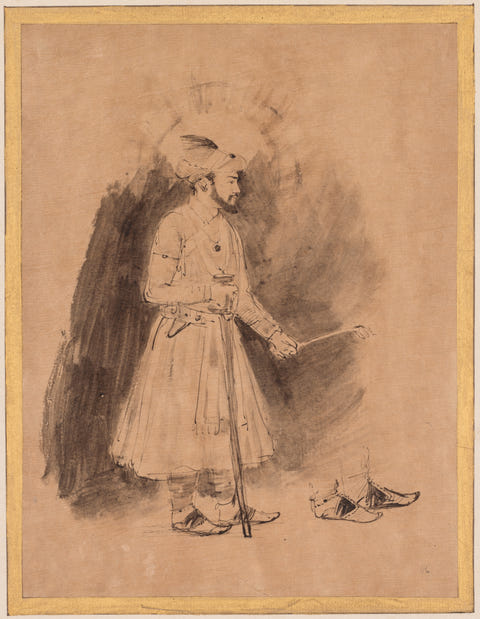
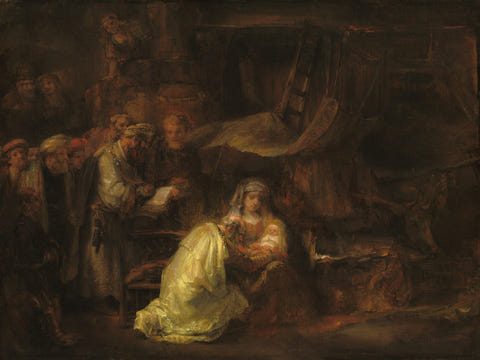
A painter, draughtsman and etcher, Rembrandt used light to bring attention to a face, a gesture or a moment of thought. Biblical stories became encounters between recognisable people. His self-portraits offer changing images of a working artist rather than one fixed identity. He experimented with rich paint surfaces and with the expressive possibilities of marks on paper.
Professional success existed alongside painful loss. Three of Rembrandt and Saskia’s children died young; their son Titus survived, but Saskia died in 1642. Family members and people close to the household appear throughout his work. His experiments as an etcher brought his imagery to collectors beyond those who could commission a painting.
A deeper, quieter light
Debt and expensive collecting contributed to bankruptcy in 1656 and the sale of his possessions. His later companion Hendrickje Stoffels and Titus helped organise an art business that supported his practice. Both died before him. The late paintings emerged from these changed circumstances, retaining an extraordinary seriousness about affection, vulnerability and the passage of time.
Personal loss and financial difficulties marked his later life, yet his art continued to develop. Later paintings often exchange public drama for a more inward intensity. His figures seem to have histories beyond the frame. Look for the places where light catches cloth, skin or a hand: the texture matters, but so does the emotional weight it gives the scene.
Printed faithfully.
Art from museum archives, without recolouring, retouching or AI enhancement. Printed on 200 gsm paper, in your choice of size and frame.