Wineglass and a Bowl of Fruit
1663
Make this work part of your everyday. Choose a size and frame finish to find its place in your home.
From £19.50
Choose size & frame1619–1693 · Dutch
Glass, fruit and the gleam of a surface in shadow. Everyday looking turned into a luxurious pleasure.
1 print · Your size. Your frame.
1663
Make this work part of your everyday. Choose a size and frame finish to find its place in your home.
From £19.50
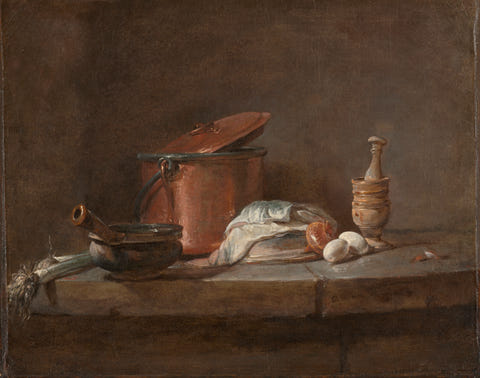
Choose size & frameWillem Kalf was born in Rotterdam, the son of a prosperous textile merchant. After his mother’s death he worked in Paris before returning to the Netherlands. His early paintings included kitchen and farm interiors. He later settled in Amsterdam, where his art developed into the elaborate still lifes for which he became one of the seventeenth century’s leading painters.
Paris offered access to an active market and a different artistic environment, before he returned to the Netherlands in the 1640s. In 1651 he married Cornelia Pluvier, known for her calligraphy and poetry. Their move to Amsterdam placed him within a prosperous trading city, where imported objects and fine craftsmanship offered a rich vocabulary for still-life painting.
Kalf’s mature arrangements bring together a small number of objects against dark surroundings. Fine glass, silver, porcelain and fruit become opportunities to describe sheen, translucency and texture. These lavish displays are often called pronkstilleven. Their richness is balanced by restraint: carefully organised light allows an object to emerge from shadow without overwhelming the quiet unity of the scene.
The shift from humble interiors toward sumptuous arrangements changed both the contents and scale of his attention. A costly vessel, a lemon peel or a porcelain bowl could carry the structure of an entire composition. The objects also reflect Amsterdam’s commercial connections, although Kalf’s selective light turns a display of possessions into something more concentrated and pictorial.
His work as an art dealer brought another form of expertise into his later career. The surviving paintings show how steadily he refined a specialised language rather than continually seeking new kinds of subject. Their impact rests on the relationship between a few carefully chosen things, and on the painter’s ability to make each material respond differently to light.
Kalf eventually devoted more of his energies to art dealing and died in Amsterdam in 1693. His paintings ask us to slow down before things we might otherwise pass over. Notice the difference between a reflected highlight and the glow inside a glass. That small distinction can become the picture’s main event, making the material world feel unexpectedly abundant.
Art from museum archives, without recolouring, retouching or AI enhancement. Printed on 200 gsm paper, in your choice of size and frame.