Johannes Vermeer was born in Delft and lived there throughout his life. His father was an innkeeper and art dealer, placing pictures within the family’s daily world. Vermeer married Catharina Bolnes in 1653 and became a member of the city’s painters’ guild. The details of his artistic training remain uncertain, but his surviving paintings reveal an exceptionally deliberate intelligence.
His father ran an inn and dealt in pictures, placing art within the working life of the household. In 1653 Vermeer married Catharina Bolnes and became a master of Delft’s painters’ guild. He lived within a large family, connected through Catharina to her mother Maria Thins. The surviving record suggests a career rooted closely in this one city.
The eloquence of an interior
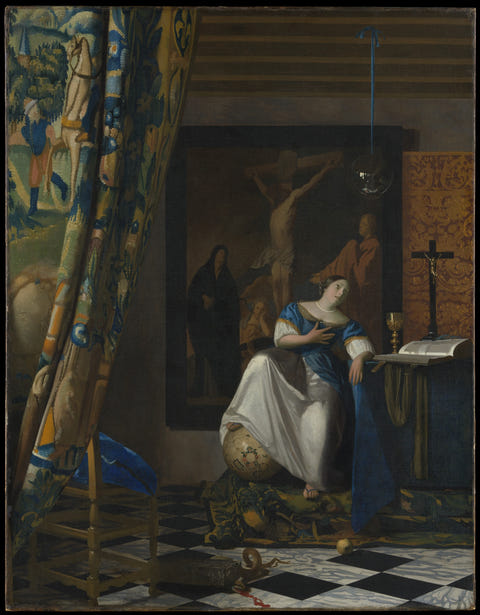
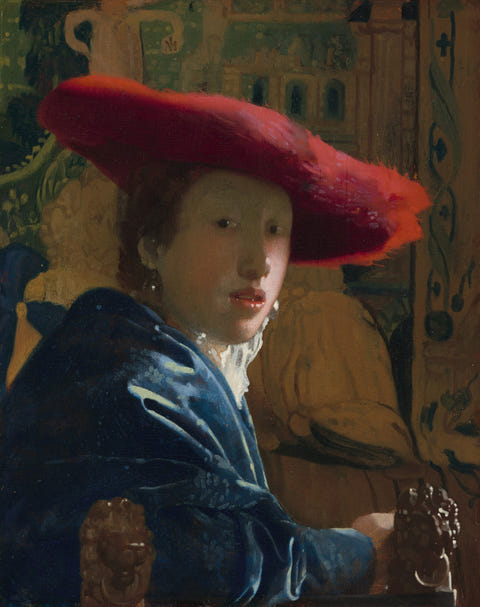
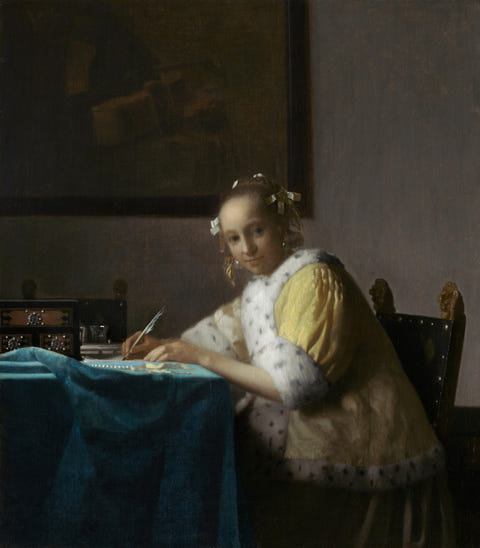
Vermeer’s early subjects included historical and religious scenes. He became particularly associated with intimate views of daily life: reading, music, letters and moments of thought. Carefully organised rooms and a restrained colour palette give these scenes their balance. Light does more than describe objects; it creates relationships between people, surfaces and the space they share.
Vermeer’s output was small, and his pictures demanded concentrated work. Rooms, letters, instruments and everyday gestures became material for complex arrangements of light. He also served in the leadership of the painters’ guild. Although later forgotten by a wider public, he was known to collectors during his lifetime, and visitors sought him out in Delft.
A reputation rediscovered
The economic crisis following the French invasion of 1672 damaged the market for paintings. Vermeer’s household fell into financial difficulty, and he died in 1675 leaving debts. Only about thirty-five paintings are generally accepted as his work. The subsequent recovery of his reputation made this small surviving body one of the most intensely studied in European art.
Vermeer died in 1675, leaving a small body of paintings. His fame remained limited for generations before a nineteenth-century revival brought wider recognition. Today, the quiet concentration of his work continues to draw viewers close. Let the eye move from the brightest passage into the shadows: the room opens gradually, and an apparently uneventful moment becomes full of possibility.
Printed faithfully.
Art from museum archives, without recolouring, retouching or AI enhancement. Printed on 200 gsm paper, in your choice of size and frame.