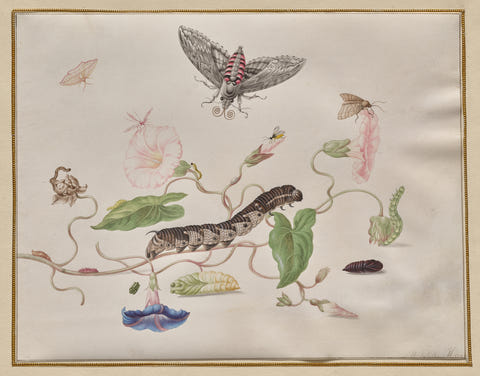
Convolvulus and Metamorphosis of the Convolvulus Hawk Moth
c. 1670–90
Illustrative frame preview.
Cleveland Museum of ArtOriginal work, 1817–24
Rose blossoms, buds and a detached rose hip are arranged against a cream support. Redouté's watercolour combines fine leaf veins with delicate petal shading and generous surrounding space.
View the museum record. Archive image: CC0.
£29.00
From museum archives. No recolouring, retouching or AI enhancement.
UK delivery. Unframed £4.99, free from £50. Wood-frame delivery included.
Fine-art print on 200 gsm enhanced matte paper. Measurements are the paper dimensions, including the white border. Framing adds to the overall dimensions. The artwork keeps its approved composition within those margins. White, natural and dark wood frames are ready to hang with plexiglass.
Our print guideRose blossoms, buds and a detached rose hip are arranged against a cream support. Redouté's watercolour combines fine leaf veins with delicate petal shading and generous surrounding space.
View the museum record. Archive image: CC0.
Belgian-born, active in France · 1759–1840
Pierre-Joseph Redouté became one of the best-known botanical artists of his era. Born in 1759, he built his career in France, bringing a painter’s sensitivity to the close study of flowers. His work sits at the meeting of art and botany: the defining features of a plant remain clear, while its colour, curves and changing surfaces become the subject of careful attention.
Redouté was associated with the French court and with the gardens of Malmaison. He illustrated important botanical publications, including works connected to Joséphine de Beauharnais. His watercolours of roses, lilies and other flowers made individual plants into complete compositions. A stem provides structure, leaves supply rhythm, and the flower becomes an intricate centre of colour.
Explore Pierre-Joseph Redouté prints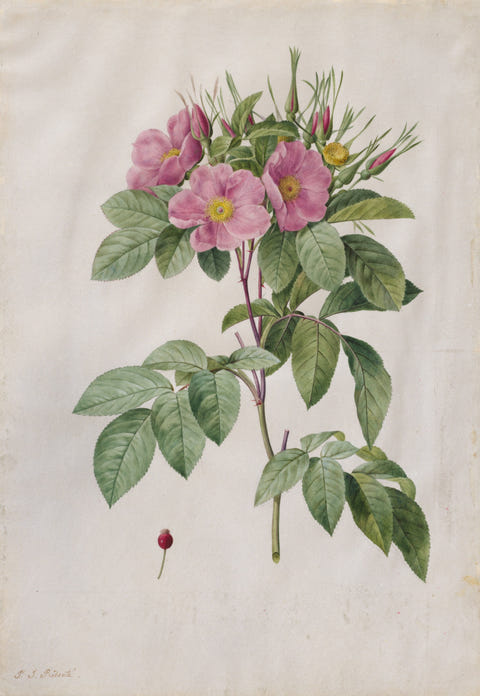
c. 1670–90
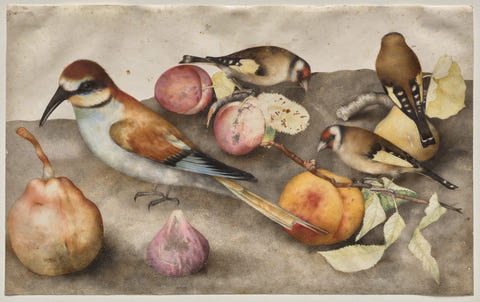
c. 1650

1827–1838