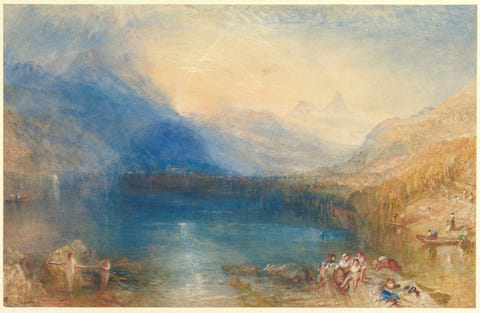
The Lake of Zug
1843
Illustrative frame preview.
The Metropolitan Museum of Art, New YorkOriginal work, ca. 1835
Boats cross a luminous Venetian canal beneath a wide blue sky. Turner gathers buildings, sails and figures into a richly detailed foreground while dissolving the distance into light and reflections.
A fine-art giclée reproduction on 200 gsm uncoated paper. The complete composition is presented with a white paper border. Choose from the available sizes and unframed or framed finishes.
This Small edition has wider white margins, with the complete artwork measuring approximately 6.6 × 5 inches inside the 10 × 8 inch paper.
£29.00
UK delivery. Unframed £4.99, free from £50. Wood-frame delivery included.
Fine-art print on 200 gsm enhanced matte paper. Measurements are the paper dimensions, including the white border. Framing adds to the overall dimensions. The artwork keeps its approved composition within those margins. White, natural and dark wood frames are ready to hang with plexiglass.
Boats cross a luminous Venetian canal beneath a wide blue sky. Turner gathers buildings, sails and figures into a richly detailed foreground while dissolving the distance into light and reflections.
A fine-art giclée reproduction on 200 gsm uncoated paper. The complete composition is presented with a white paper border. Choose from the available sizes and unframed or framed finishes.
This Small edition has wider white margins, with the complete artwork measuring approximately 6.6 × 5 inches inside the 10 × 8 inch paper.
British · 1775–1851
Joseph Mallord William Turner was born near Covent Garden in London. He entered the Royal Academy Schools in 1789 and began exhibiting watercolours the following year. His early work grew from topographical drawing, while Dutch seascapes and the classical landscapes of Claude helped expand his ambitions. Watercolour, oil painting and engraving all became part of his artistic language.
Turner increasingly made brilliant colour a principal element in landscapes and seascapes. Buildings, boats and mountains could emerge from atmosphere rather than sit firmly apart from it. His interest extended to the changing modern world, including steam power and new technology. The freedom of his painting provoked criticism, while the writer John Ruskin became a passionate defender.
Explore J. M. W. Turner prints
1843

1818–19
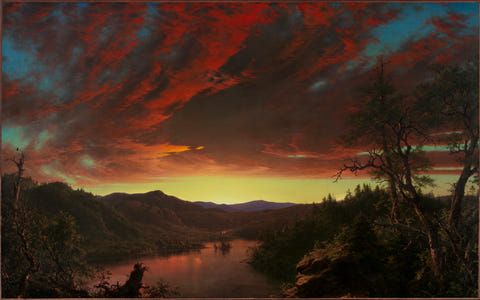
1860

1897