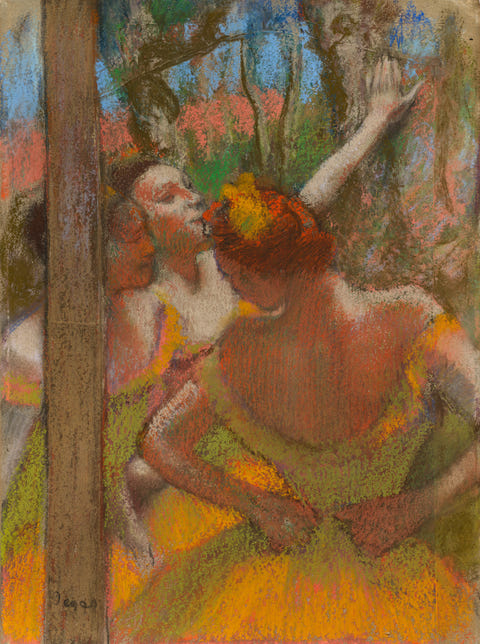
Edgar Degas — Portrait of the Duchess of Montejasi Print
c. 1875
Illustrative frame preview.
National Gallery of Art, WashingtonOriginal work, 1866, reworked 1880-1881 and c. 1897
A rider and horse leap through a crowded steeplechase scene as another figure falls nearby. Degas keeps the action loose and immediate.
A fine-art giclée reproduction on 200 gsm uncoated paper. The complete composition is presented with a white paper border. Choose from the available sizes and unframed or framed finishes.
$29.00
Delivery to the contiguous US and Washington, DC.
Fine-art print on 200 gsm enhanced matte paper. Measurements are the paper dimensions, including the white border. Framing adds to the overall dimensions. The artwork keeps its approved composition within those margins. White, natural and dark wood frames are ready to hang with plexiglass.
A rider and horse leap through a crowded steeplechase scene as another figure falls nearby. Degas keeps the action loose and immediate.
A fine-art giclée reproduction on 200 gsm uncoated paper. The complete composition is presented with a white paper border. Choose from the available sizes and unframed or framed finishes.
French · 1834–1917
Born into a Parisian banking family, Edgar Degas developed a rigorous grounding in drawing. He copied Old Master paintings at the Louvre and spent three years in Italy studying art. His early portraits and historical subjects gave way to contemporary life: racecourses, theatres and ballet studios became places to investigate how bodies move through space.
Degas helped organise the independent exhibitions that established Impressionism, although he preferred to describe himself as a realist. Unlike painters chiefly concerned with outdoor light, he explored artificial illumination and carefully studied poses. Unusual viewpoints and unexpected framing make his scenes feel glimpsed in passing. Behind that apparent immediacy lies an exacting process of observation, drawing and revision.
Explore Edgar Degas prints